Indoor air quality sampling means testing the very air you breathe inside your home. By collecting air and sending samples to a certified lab, we have the ability to identify hidden mold spores, allergens, chemicals, and other contaminants that affect both your family’s health.
Mold & Mildew Solutions is certified in testing these things upon your request.
- Mold spores and mycotoxins
- Allergens like dust and pollen and common pollutants
- Volatile Organic Compounds (VOCs) and formaldehyde
- Asbestos
- Particles
- Radon levels
- Pathogens such as COVID-19 residue
- Chemical residues (e.g., meth contamination)
The results show what contaminants are not seen with the naked eye and at what levels, allowing you to make informed decisions about remediation or prevention.
Why Mold Testing Matters
Mold growth can begin in hidden areas long before it’s visible. That’s why our inspections and professional mold sampling are so important. By collecting air samples from key areas in your home, we can determine if mold spores are present, what types of mold exist, and whether the levels are higher than what’s considered normal for healthy living conditions.
Air Sampling for Mold
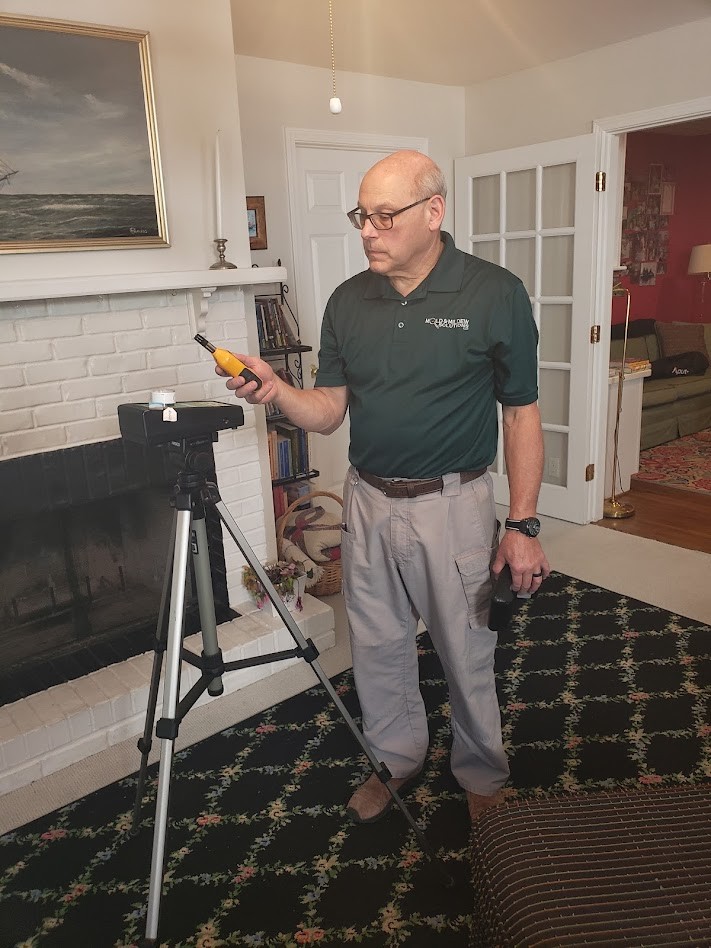
To accurately measure what’s in your air, we use professional air sampling cassettes designed to capture even the smallest mold spores and particles. These cassettes pull a controlled amount of air from your home into a collection medium, which is then carefully sealed and documented. Once collected, your samples are shipped to an accredited, independent laboratory for microscopic analysis. The lab identifies and counts the types of mold present and compares them to normal background levels, giving you a clear, science-based report on whether your air is healthy or contaminated. This process removes the guesswork and ensures you get reliable answers about the safety of your home’s breathing space.
What are Mycotoxins and Why Should You Care?
Mycotoxins are toxic chemical byproducts produced by certain molds as they grow and reproduce. Mycotoxins are chemical substances that mold releases into the air. These toxins can remain behind even after mold colonies are removed, making them a hidden danger long after the visible mold is gone. Common molds that can produce mycotoxins include Stachybotrys chartarum (often called “black mold”), Aspergillus, and Penicillium species. Why Should You Care? The Health Risks of Mycotoxins.
Exposure to mycotoxins has been linked to a range of health problems. Because they are microscopic and easily inhaled or ingested, they can trigger issues even in people who don’t have typical mold allergies. Health risks include:
- Chronic headaches and fatigue
- Respiratory problems (wheezing, coughing, shortness of breath)
- Aggravated asthma or allergy-like symptoms
- Skin irritation or rashes
- Neurological issues such as brain fog, difficulty concentrating, or dizziness. In severe or prolonged cases, potential immune system suppression
- Children, the elderly, and people with compromised immune systems are often the most vulnerable
Why Testing Matters
The problem with mycotoxins is that you can’t detect them on your own.
Protect Your Family’s Breathing Space
At Mold & Mildew Solutions, we believe your home should be the healthiest place you spend time. By testing for mycotoxins along with mold spores and other airborne contaminants, we provide answers you can trust and solutions that make your home truly safe.
You have the option to ask us to sample for these particulates.
- Cellulose fibers = Bits of paper, insulation, plant material, etc.
- Synthetic fibers = Plastic fibers (from carpet, upholstery, clothing, etc.)
- Fiberglass = Glass-based fibers used in insulation or duct lining
- Dander = Skin cells from humans or animals
- Plant hairs = Tiny hairs from plants or fibers of leafy material
- Talc = Fine dust or mineral particles related to building materials
- Soot / Aciniform-like soot = From combustion sources (fires, heating, cooking)
- Ash / char-like soot = Residue from burned materials (wood, paper)
- Animal hair = Pet fur, small mammal traces
- Human hair = Human shed hairs
- Wood fibers = Splinters or degraded wood dust
- Feather barbules = Tiny feather particles from pillows, insulation, etc.
- Pollen = Vegetation reproductive particles
- Gypsum = Drywall / plaster dust
- Silicates = Minerals (sand, concrete dust, cement, soil dust)
- Carpet beetle larvae = Parts of insects or larval residue
- Insect frass / insect parts = Droppings or fragments of insects
- Mineral salts = Crystalline particles from soils, salts, etc.
- Opaque particles = “other unknowns”Particulates not classifiable by light microscopy
- Rust = Metallic corrosion particles
Don’t take chances with hidden toxins. Call us today to schedule professional mycotoxin testing and take the first step toward a healthier home.